

Table of Contents
- What Long-Term CPAP Use Actually Does to Your Body
- Common CPAP Side Effects and How They Change Over Time
- Aerophagia, Bloating, and Air Swallowing: When It Becomes a Long-Term Concern
- Psychological Adaptation: Claustrophobia, Anxiety, and Recall-Related Worries
- CPAP Compliance Tips for Reducing Side Effects Over Years
- How to Clean CPAP Equipment to Prevent Long-Term Irritation
- Rare but Serious Long-Term Risks: Pneumonitis, Conjunctivitis, and Cardiovascular Effects
- Frequently Asked Questions
Last Updated: September 18, 2026
What Long-Term CPAP Use Actually Does to Your Body
For most people with obstructive sleep apnea, the long-term side effects of a CPAP machine are far outweighed by the health gains. CPAP keeps the airway open during sleep, stabilizing oxygen levels and reducing the cardiovascular strain of repeated apnea and hypopnea events. CPAP.parts has supplied machines, masks, and accessories since 2005. Compliant patients often find that the side effects they experience are usually mechanical, not dangerous.
The key distinction is between nuisance effects and genuine health risks. Nasal congestion, dry mouth, skin irritation, and aerophagia are common and manageable; serious complications are rare. The real variable is adherence: a machine that sits in a drawer helps no one.
Most long-term problems trace back to a poor mask seal, wrong pressure settings, or skipped maintenance. Fix those three and therapy stays sustainable for years.
The benefits of CPAP scale with consistency, not intensity. A well-fitted mask used every night beats a perfect setup used twice a week.
Common CPAP Side Effects and How They Change Over Time
Most common CPAP side effects appear in the first weeks and either fade as the body adapts or persist because of a fixable setup issue. According to clinical guidance on CPAP therapy from the American Academy of Sleep Medicine, mask discomfort and nasal symptoms are the most frequently reported reasons people abandon treatment early.
Here’s how the typical timeline breaks down:
| Side Effect | When It Appears | Long-Term Outlook |
|---|---|---|
| Nasal congestion | First 1-2 weeks | Improves with humidification |
| Dry mouth | Early, ongoing | Fixed by mask type or humidity |
| Skin irritation | Weeks 2-6 | Resolves with better mask fit |
| Aerophagia | Early | Managed via pressure review |
| Claustrophobia | First nights | Eases with acclimatization |
The pattern matters: symptoms that improve over time mean therapy is working, while long-term side effects of cpap machine that stay the same or worsen usually point to equipment, not the treatment itself.
Nasal Congestion, Dry Mouth, and Sinus Pressure
Nasal congestion, dry mouth, and sinus pressure are the most common complaints, and humidification is the single most effective fix: a heated humidifier moistens the air before it reaches your nose, reducing dryness and irritation. A full-face mask helps if mouth breathing is the culprit.
A common mistake is treating congestion with long-term decongestant sprays, which cause rebound congestion. If it persists, talk to your clinician rather than self-medicating.
Skin Irritation, Dermatitis, and Mask Seal Problems
Skin irritation and dermatitis usually come from a mask that’s too tight or a cushion overdue for replacement, with pressure sores forming on the nose bridge or cheeks. The fix is counterintuitive: a looser fit often seals better, because over-tightening distorts the cushion.
Check your mask seal nightly, a small leak can cause redness and broken sleep unnoticed. Replace cushions and nasal pillows on the manufacturer’s schedule, since worn silicone loses its seal.
Aerophagia, Bloating, and Air Swallowing: When It Becomes a Long-Term Concern
Aerophagia is the swallowing of air during CPAP therapy, causing bloating, burping, and stomach discomfort. It’s common early on and usually settles as pressure is fine-tuned; if it persists for months, your airway pressure may be higher than you need.
The cause is usually pressure exceeding what’s needed to keep the airway open. A clinician can review your titration data and adjust the setting; some patients benefit from a bilevel device, which uses different pressures for inhaling and exhaling.
Don’t simply tolerate persistent bloating. It’s a sign worth raising with your sleep specialist, not a permanent cost of treatment.
Ignoring ongoing aerophagia for months can push people to stop therapy entirely. Address the pressure setting early rather than letting discomfort erode your compliance.


Psychological Adaptation: Claustrophobia, Anxiety, and Recall-Related Worries
Most CPAP content stops at the first month, when claustrophobia peaks and desensitization works best. But the psychological side doesn’t end when the mask stops feeling strange, it changes shape over years, and these long-term mental effects catch users off guard.
The First Weeks: Claustrophobia and Sensory Overload
Early claustrophobia is more sensory than psychological: the mask restricts the face, airflow is audible, and exhaling feels effortful. Desensitization separates the sensation from the panic response, wear the mask while awake for 20 to 30 minutes, then extend into sleep. Ramp features, which start low and climb over 20 to 45 minutes, ease the transition. Most users adapt within two to four weeks.
The Multi-Year Shift: Device Dependency and Mental Fatigue
After the first year, acute anxiety fades but quieter concerns surface. Long-term users describe two patterns absent from clinical side-effect lists.
Find everything you need for your CPAP therapy →
The first is device dependency, the realization that sleep quality, and next-day function, now hinges on a machine. Travel, power outages, camping, and hotel stays become logistical problems, which is why some long-term users quietly reduce usage on trips and then struggle to rebuild the habit at home.
The second is mental fatigue from the nightly routine: cleaning, refilling the humidifier, checking the seal, packing for travel. Small individually, these tasks compound over years.
Recall-Related Anxiety and Trust in the Device
Medical device recalls add a different long-term stress. When a manufacturer recalls a foam component, sound abatement part, or power supply, patients understandably worry whether the air they’ve breathed for years was safe. The anxiety isn’t irrational, and dismissing it doesn’t help adherence.
The psychological side of CPAP is not a first-month problem. It is a first-month problem, a first-year adjustment, and a long-term relationship with a device. Even the best CPAP machines can produce such problems. Users who plan for all three stages stay compliant longer than users who only prepare for the mask.
CPAP Compliance Tips for Reducing Side Effects Over Years
CPAP compliance tips matter most in the first three months, when habits form and most people quit. The goal isn’t perfection but consistency, small adjustments compound over years into better sleep and cardiovascular health.
- Use your machine every night, including weekends, to build the habit
- Address mask leaks the moment they appear rather than tolerating them
- Track your therapy data through your device app or clinician
- Keep spare masks and filters on hand so a worn part never forces a night off
- Revisit your setup with your clinician if symptoms return after a stable period
Adjusting Pressure Settings and Humidification
Pressure settings and humidification resolve most persistent side effects, and both should change with clinical guidance. Never adjust your own pressure without consulting your sleep specialist, since incorrect settings can reduce effectiveness or worsen aerophagia.
How to Clean CPAP Equipment to Prevent Long-Term Irritation
Cleaning your CPAP equipment regularly is the most overlooked factor in long-term comfort: residual oils, dust, and moisture degrade the mask seal and irritate skin, and a consistent routine prevents both.
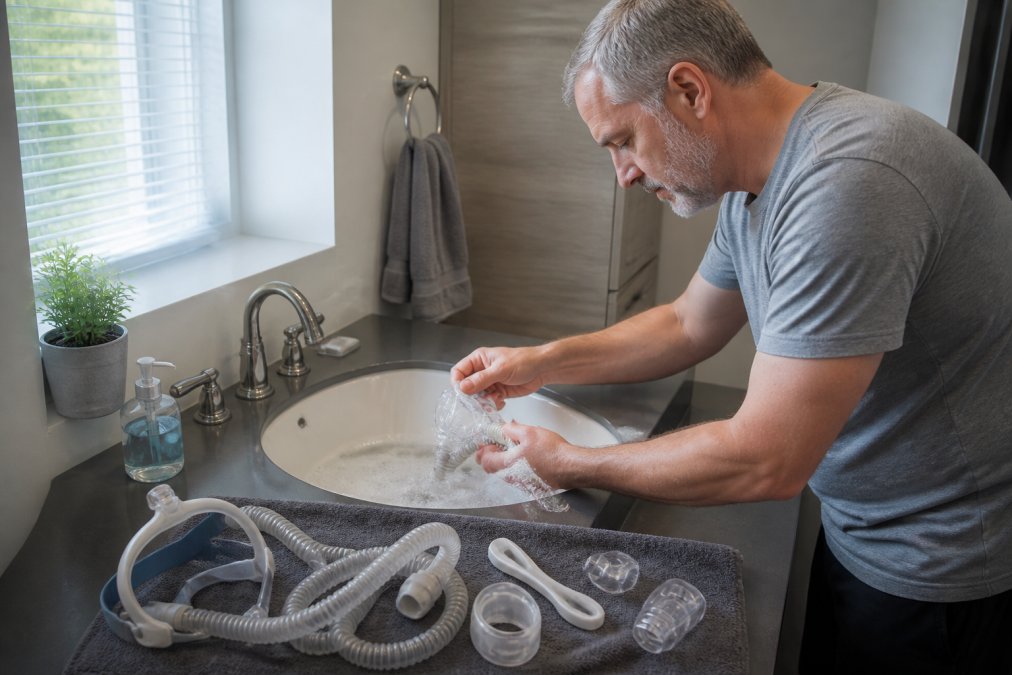
Here’s a simple weekly routine:
- Unplug the machine and disconnect the mask, tube, and humidifier chamber
- Wash the mask cushion and tube in warm water with mild, unscented soap
- Rinse thoroughly and air-dry on a clean towel, away from direct sunlight
- Wipe the machine’s exterior with a damp cloth; never submerge the device
- Replace filters on the schedule your manufacturer specifies
Rare but Serious Long-Term Risks: Pneumonitis, Conjunctivitis, and Cardiovascular Effects
Serious long-term harm from CPAP is uncommon, but the rare risks that exist almost always trace to two variables: equipment hygiene and mask fit. Understanding the mechanism matters more than memorizing condition names, because the mechanism is what you control.
Pneumonitis and Respiratory Irritation
Pneumonitis is an inflammatory reaction in lung tissue, not an infection. In CPAP it has been reported in isolated cases, most often linked to contaminated humidifier chambers, dirty filters, or tubing with biofilm from moisture sitting between nights: a contaminated chamber aerosolizes microorganisms into the lower airway, triggering inflammation rather than a typical infection.
Conjunctivitis and Eye Irritation
Conjunctivitis from CPAP is almost always mechanical, not infectious. When a mask leaks upward toward the eyes, continuous airflow strips the tear film overnight, causing redness, grittiness, and dryness on waking, sometimes mistaken for allergy or infection. Over months, chronic tear-film disruption leaves the ocular surface more vulnerable even when leaks are minor.
Cardiovascular Effects: Protective, Not Harmful
The cardiovascular story is the opposite. Untreated obstructive sleep apnea is associated with hypertension, atrial fibrillation, and increased cardiovascular events, largely because repeated apneas cause intermittent hypoxia and sympathetic nervous system surges. Effective CPAP reduces those surges by keeping the airway open and oxygen levels stable.
Rare does not mean impossible. If you develop a persistent cough, unexplained breathlessness, or eye irritation that doesn’t improve with mask adjustments, raise it with your clinician rather than self-diagnosing online. The conditions above are manageable when caught early and are far less common than the everyday side effects covered earlier in this guide.
Frequently Asked Questions
Are there any permanent side effects from using a CPAP machine?
Most CPAP side effects are temporary or manageable with adjustments. Long-term use is generally associated with potential improvements in cardiovascular health and sleep quality. If side effects persist despite adjustments, consult a sleep specialist to review your pressure settings and mask type.
How can I prevent common CPAP side effects over time?
Prevention starts with proper mask fit and regular cleaning. Replace masks and filters on schedule, use humidification to reduce dryness, and adjust ramp or pressure settings with your clinician’s guidance. Nasal pillows or full-face masks may suit different face shapes. Keeping a symptom log helps identify triggers. CPAP compliance tips like these reduce the chance of long-term irritation and support consistent therapy.
Why do so many people stop using CPAP?
Common reasons include mask discomfort, nasal congestion, claustrophobia, and aerophagia. These side effects often appear early and can worsen without support. Many users also feel the machine is inconvenient for travel. With proper troubleshooting, humidification, and mask alternatives, most issues improve. Adherence is higher when users receive follow-up care and practical CPAP compliance tips tailored to their lifestyle.
How does your body change after long-term CPAP use?
Long-term CPAP use can improve sleep quality, reduce daytime fatigue, and lower cardiovascular risks associated with untreated obstructive sleep apnea. Some users may experience weight changes or improved blood pressure. However, side effects like skin irritation or aerophagia may persist if equipment is not maintained. Regular cleaning of CPAP equipment and periodic mask refitting help keep therapy effective and comfortable over years.