

Table of Contents
- What a Continuous Positive Airway Pressure Machine Does
- CPAP Mask Types and How to Choose One
- CPAP Accessories for Comfort and Better Sleep
- How to Clean CPAP Equipment Safely
- CPAP, APAP, and BiPAP: What the Settings Mean
- Side Effects, Adherence, and Long-Term Tracking
- Buying a Continuous Positive Airway Pressure Machine in Europe
- Frequently Asked Questions
Last Updated: September 20, 2026
What a Continuous Positive Airway Pressure Machine Does
A continuous positive airway pressure machine blows air into your airway at a steady pressure. This pressure keeps the airway open while you sleep. The machine treats obstructive sleep apnea, where the throat closes during sleep and stops your breathing. (Source: the apnea-hypopnea index)
How Positive Airway Pressure Keeps Your Airway Open
Obstructive sleep apnea happens when the muscles in your throat relax and block the airway. Each block is an apnea or a hypopnea. The apnea-hypopnea index counts these events per hour of sleep (pubmed.ncbi.nlm.nih.gov). A higher index means more severe obstruction.
The Parts of a CPAP System
A standard system has four main parts:
- The flow generator. This unit contains the motor and the air pressure controls.
- The humidifier chamber. It adds moisture to the air so your nose and throat do not dry out.
- The tube. Heated tubing keeps the air warm and reduces condensation.
- The mask. This part connects you to the airflow.
Most machines also have a filter that traps dust and pollen. Replace the filter on a schedule to protect the motor.


CPAP Mask Types and How to Choose One
The mask decides whether therapy works. A poor seal causes leaks, noise, and sore skin. Most users who stop therapy cite mask discomfort as the main reason.
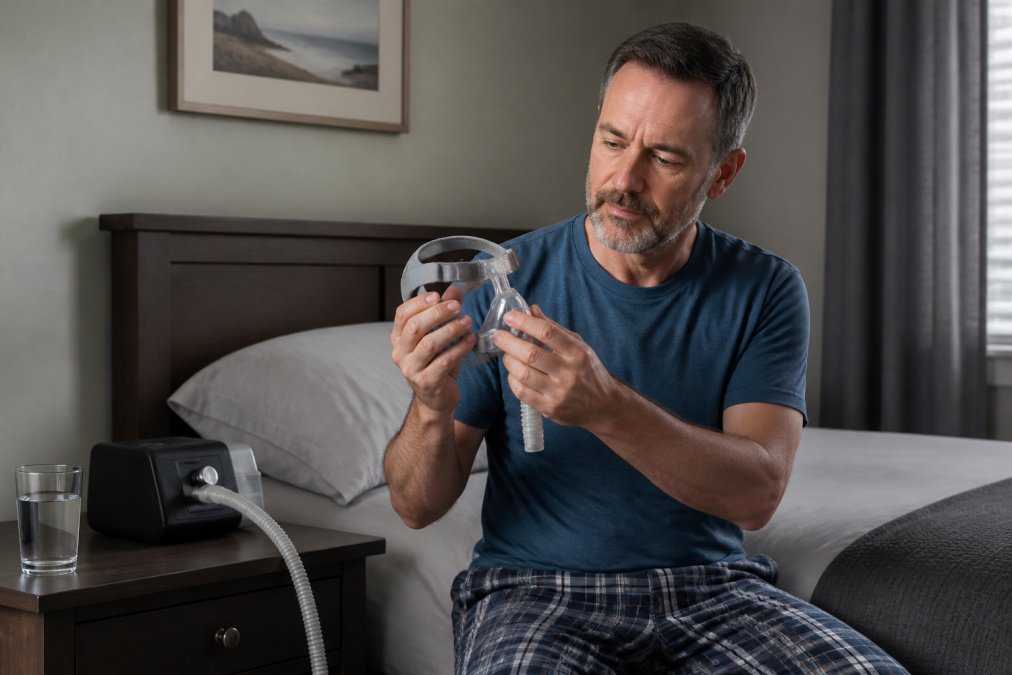
Three main mask types exist:
| Mask type | Covers | Best for | Main trade-off |
|---|---|---|---|
| Nasal mask | The nose only | Side sleepers, low pressure settings | Mouth leaks if you breathe through your mouth |
| Nasal pillow mask | The nostril openings | Claustrophobic users, travellers | Skin irritation at the nostrils |
| Full face mask | Nose and mouth | Mouth breathers, high pressure settings | Larger contact area, more bulk |


CPAP Accessories for Comfort and Better Sleep
CPAP accessories solve the small problems that build up over months of nightly use. They decide whether you keep using the machine.
Common accessories include:
- Mask liners. These fabric covers reduce skin irritation and absorb moisture.
- Heated tubing. This tube stops rainout, the water that collects in the hose and gurgles.
- Chin straps. A strap holds the mouth closed for nasal mask users.
- Tube covers. A soft wrap reduces noise and keeps the tube warm.
- Cleaning supplies. Gentle soap and a dedicated brush make the weekly clean faster.
Buy two mask cushions or pillows at the same time. Cushions wear out before the frame does, and a spare lets you keep therapy running while one part dries after cleaning.
How to Clean CPAP Equipment Safely
Clean your mask cushion and humidifier chamber every morning. Wash the tube and headgear once a week. This routine takes about five minutes and prevents most skin and sinus problems.
The steps are the same for most systems:
- Unplug the machine and remove the mask, tube, and chamber.
- Wash each part in warm water with mild, unscented soap.
- Rinse all parts with clean water until no soap remains.
- Shake off excess water and lay the parts on a clean towel.
- Let the parts air dry away from direct sunlight.
- Wipe the machine body with a dry cloth only. Never put the machine in water.
Water Quality and Drying Methods
The water you use matters. Tap water contains minerals that leave a white film on the humidifier chamber, and bacteria can grow in that film. Use distilled water if you can get it. If not, use bottled water with no added minerals.
How to Know When to Replace Each Part
Replace disposable parts on a schedule. The schedule depends on your machine model and your air quality. These are common ranges:
| Part | Common replacement interval | Signs it needs replacement sooner |
|---|---|---|
| Disposable filter | Every 2 to 4 weeks | Grey or brown colour, visible dust |
| Reusable filter | Every 2 to 3 months | Tears, loss of shape |
| Mask cushion | Every 1 to 3 months | Cracks, stiffness, leaks at the seal |
| Headgear | Every 3 to 6 months | Stretched straps, loss of tension |
| Tube | Every 3 to 6 months | Cracks, holes, stiffness |
| Humidifier chamber | Every 6 to 12 months | Cloudy plastic, cracks, mineral buildup |
Never let water sit in the tube or chamber for more than a day. Standing water grows mould, and you then breathe those spores all night. (Source: sleep apnea statistics)
Buy two mask cushions or pillows at the same time. Cushions wear out before the frame does, and a spare lets you keep therapy running while one part dries after cleaning.
Cleaning the Machine Body and Filter
The machine body needs only a dry cloth. Wipe the outside once a week. Do not open the case or let water enter the air inlet.
What to Do If You Get Sick
If you have a cold or the flu, clean your equipment more often. Wash the mask cushion and chamber twice a day. Replace the filter after you get better. This lowers the chance that you breathe the same germs back into your airway.
CPAP, APAP, and BiPAP: What the Settings Mean
The three machine types differ in how they set air pressure. CPAP delivers one fixed pressure all night. APAP changes the pressure as your needs change. BiPAP uses two pressures: a higher one when you breathe in and a lower one when you breathe out.
| Machine type | Pressure behaviour | Typical use |
|---|---|---|
| CPAP | One fixed pressure | Standard obstructive sleep apnea |
| APAP | Auto-adjusting pressure within a range | Pressure needs that vary by position or sleep stage |
| BiPAP | Two pressures, one for inhale and one for exhale | High pressure needs, or co-existing lung conditions |
Side Effects, Adherence, and Long-Term Tracking
Most side effects appear in the first weeks and fade as you adjust. Dry nose, dry mouth, and skin marks are common. A humidifier chamber and a better-fitting mask usually fix them.
What helps:
- Wear the mask for short periods while awake, so it feels normal.
- Put the machine on at the same time each night.
- Track your results in the machine app and review the data weekly.
- Tell your doctor about problems early, before you give up.
Buying a Continuous Positive Airway Pressure Machine in Europe
In most European countries, you need a prescription and a sleep study result before you buy a machine. Your doctor diagnoses the condition, sets the pressure, and writes the prescription. Rules differ by country, so check the official health authority in your own country.
How to Get a Prescription for a CPAP Machine
The path to a prescription usually has four steps:
- See your general doctor. Tell your doctor about your sleep problems. These include loud snoring, gasping at night, and daytime sleepiness.
- Get a sleep study. Your doctor sends you to a sleep clinic or gives you a home sleep test. The test measures your apnea-hypopnea index. This number shows how many times your breathing stops or slows each hour.
- Get a diagnosis. A sleep doctor reviews the test results. If your apnea-hypopnea index is above a set level, the doctor diagnoses obstructive sleep apnea.
- Get a pressure titration. The doctor finds the pressure setting that keeps your airway open. This may happen during a second sleep study or through an auto-adjusting machine that records your needs over several nights.
After these steps, the doctor writes a prescription. The prescription lists your machine type, your pressure setting, and your mask type. Keep a copy. You will need it for the supplier and for insurance.
How to Work with a Home Medical Equipment Supplier
A home medical equipment supplier sells and rents CPAP machines, masks, and accessories. In many European countries, the supplier bills your insurance company directly for the machine and replacement parts.
Write down the answers. Keep them with your prescription.
How Insurance Billing Works for CPAP
Insurance plans treat CPAP as durable medical equipment, which is equipment you use at home for a medical reason. Most plans cover CPAP therapy when you have a diagnosis and a prescription.
What to Check Before You Choose a Supplier
When you choose a supplier, check these points:
- Does the supplier hold authorisation to resell the brands it lists?
- Can it supply the exact mask and filter for your machine model?
- What is the return process if a part does not fit?
- How fast is delivery, and how does the shop protect your personal and health data?
- What is the replacement schedule for consumable parts?
CPAP.parts has supplied CPAP machines, masks, and accessories since 2005. We are an authorised reseller for many brands and hold exclusive representation for others in several countries. We ship next day across Europe and worldwide. We aim to help you find the correct replacement mask or filter for your machine model.
The machine is only half of the therapy. The mask, the filter, and your nightly routine decide the result. Budget for consumables from the start, not just for the machine.
Frequently Asked Questions
What does a continuous positive airway pressure machine do?
A continuous positive airway pressure machine pushes a steady stream of filtered air through a tube and mask. This air pressure keeps the upper airway from closing during sleep. The result is fewer apnea and hypopnea events, less snoring, and better oxygen saturation through the night. Your doctor sets the air pressure after a sleep study or home test. The machine does not cure sleep apnea, but it controls the condition while you use it.
How many hours a day should I use my CPAP machine?
Most sleep specialists advise using your CPAP machine for the full time you sleep, which is usually 7 to 8 hours each night. Therapy adherence is often measured as the share of nights you use the machine for at least 4 hours. Short or irregular use limits the benefit. If you keep removing the mask during the night, speak to your care team about mask fit, humidity, or exhalation pressure relief.
Can I buy a CPAP machine on my own?
In most European countries you need a prescription or a doctor’s confirmation of obstructive sleep apnea before you can buy a CPAP machine. Rules differ by country, so check the local requirements first. Once you have the prescription, you can buy the machine and replacement supplies from an authorized reseller. CPAP.parts supplies machines, masks, and filters with next day delivery across Europe and worldwide, and pricing depends on the model and options you choose.
What are the common side effects of using a CPAP machine?
Common side effects include a dry nose or mouth, nasal congestion, skin marks from the mask, and bloating from swallowed air. Most of these improve when you adjust the humidifier chamber, try a different CPAP mask type, or ask your clinician to review the air pressure settings. A mask seal that leaks is a frequent cause of sore eyes and noise. Contact your care team if symptoms continue, because they can check for other causes.
How do I clean CPAP equipment without damaging it?
Wash the mask cushion and the humidifier chamber in warm water with mild soap, then rinse and let them air dry away from direct sun. Wipe the machine body with a damp cloth only. Replace the disposable filter on the schedule your supplier gives you, and check the reusable filter if your model has one. Never put the machine or the heated tubing in water. Full steps are in the cleaning section of this guide.
Can I travel with a continuous positive airway pressure machine?
Yes. Most modern machines are light enough for carry-on luggage and run on both mains power and a travel battery. Pack the mask, tubing, and a spare filter in your hand luggage so they stay with you. Ask your airline about using the machine on board, and carry a copy of your prescription. Portable sleep therapy devices and travel cases make the process easier, especially on long trips.
Sleep apnea therapy fails quietly. A leaking mask, a dirty filter, or a skipped night adds up, and the symptoms return without warning. The fix is a supplier who stocks the right parts, ships them fast, and answers questions before you order. CPAP.parts offers next day delivery across Europe, authorised resale of major brands, and a support team that helps you match masks and filters to your exact machine. Get started with CPAP.parts and keep your therapy running every night.